Mars Rover Project
December 2025 | University of Pittsburgh | Pennsylvania, United States of America
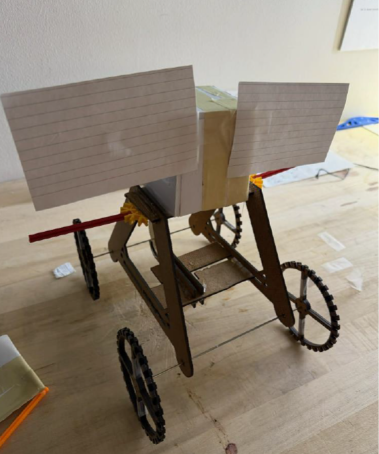
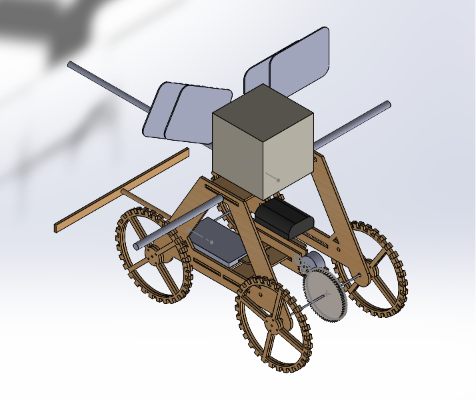
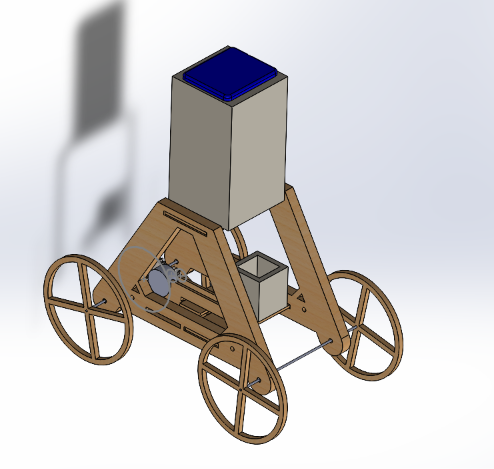
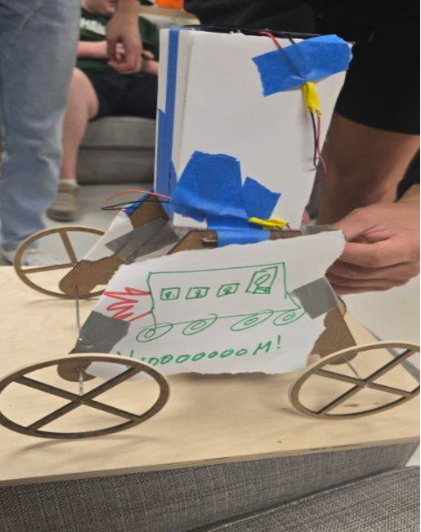
During the Fall 2025 Semester, four sophomore mechanical engineering students and I worked on a Mars rover for our mechanical design class, MEMS 24. The project was divided into two phases: Phase 1 and Phase 2. Both phases involved building and designing a rover using existing materials, tools, and machinery available at the Pitt Makerspace. Additionally, the rover had to use the power devices and equipment provided by the instructor (solar panels, battery packs, switches).
Phase 1:
In this phase, the team's primary objective was to build a durable, energy-efficient, and speedy Solar-powered rover. During test day, the rover must undergo two tests: a speed test and an obstacle test. A major role I played was helping the team design the rover’s chassis and later building the entire rover with materials and tools from Pitt’s Makerspace. Attached below is a logbook that showcases all stages of this phase.
Phase 2:
In this phase, my team's main objective was to improve the previous design and integrate batteries instead of solar panels. Along with this, we had to work with other teams and their rovers, as this project involved all the grouped teams working together in an obstacle test on a much larger scale than the previous phase. Unlike the previous phase, there would be more obstacle courses set up for each rover in the large group. The catch was that all rovers had to be activated using switches provided by our instructors. A major role I played in this project was brainstorming new wheel designs that catered to the other team’s rovers and modifying Phase 1’s design by building the components added by the team that would integrate with the new electronics given to us. Attached is a logbook that showcases each stage of the project.